

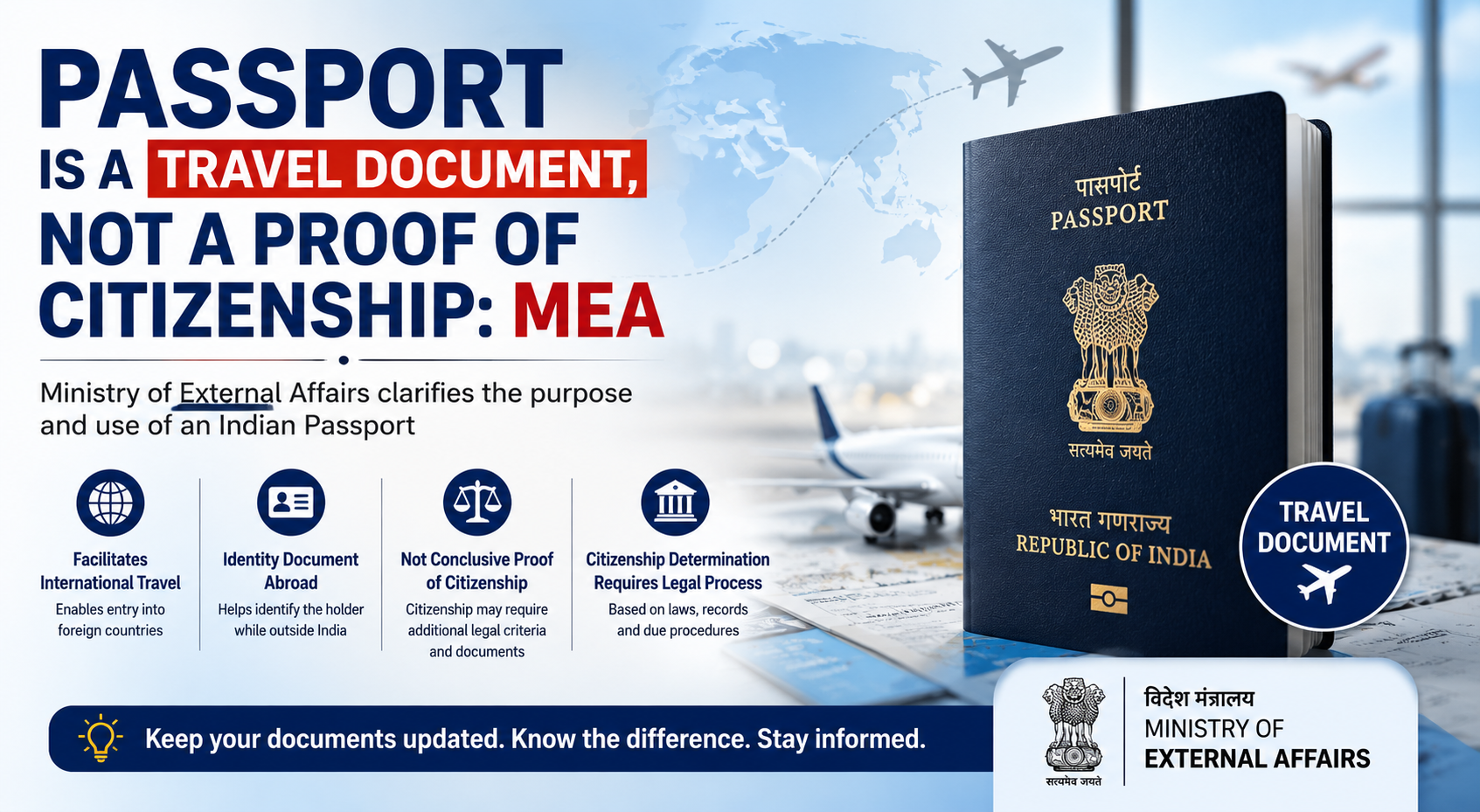
Passport Is a Travel Document, Not Proof of Citizenship: MEA Clarifies
The Ministry of External Affairs (MEA) has clarified that an Indian passport is primarily a travel document and should not be considered conclusive proof of citizenship in every legal circumstance. The statement has generated significant discussion among citizens, legal experts, and policymakers across the country.
Understanding the Role of a Passport
A passport is issued by the Government of India to facilitate international travel and establish the identity of its holder while abroad. It serves as an official document that enables citizens to travel internationally and seek consular assistance when necessary.
However, the MEA emphasized that the possession of a passport alone does not automatically constitute definitive legal proof of citizenship in all situations. Citizenship determination may involve additional legal procedures and supporting documents depending on specific circumstances.
Difference Between Travel Documents and Citizenship Proof
Many people assume that having a passport is sufficient evidence of citizenship. Legal experts explain that different documents serve different purposes:
- Passport: Primarily a document for international travel and identification.
- Birth Certificate: Provides information regarding birth details and parentage.
- Citizenship Certificate: Formal proof issued under specific legal provisions.
- Government Records: Various official records may be required during administrative or legal proceedings.
Public Discussion and Reactions
The clarification has sparked discussions regarding documentation, identity verification, and citizenship laws in India. Some experts believe the statement helps increase public awareness about the legal distinction between identity documents and proof of citizenship.
Others have emphasized the importance of educating citizens about maintaining proper records and understanding government procedures.
Importance of Proper Documentation
Maintaining accurate and updated documents is essential for various purposes, including:
- International travel
- Educational admissions
- Employment verification
- Property transactions
- Government services
- Legal proceedings
Citizens are encouraged to preserve important documents and remain informed about official guidelines issued by government authorities.
Digital Governance and Public Awareness
India's increasing focus on digital governance has improved access to public services and official information. Digital platforms and online documentation systems have made it easier for citizens to manage records and complete administrative procedures efficiently.
Public awareness campaigns continue to play an important role in helping individuals understand their rights and responsibilities regarding legal documentation.
Conclusion
The Ministry of External Affairs' clarification reinforces that a passport is fundamentally a travel document designed for international movement and identification. While it is an important official document, citizenship determination may require additional legal considerations depending on the situation.
Citizens should always refer to official government sources and maintain proper documentation to avoid confusion and ensure compliance with legal requirements.
Disclaimer: This article is intended for informational and educational purposes only and should not be considered legal advice. Readers are encouraged to consult official government notifications and legal experts for specific guidance.





.jpeg)

